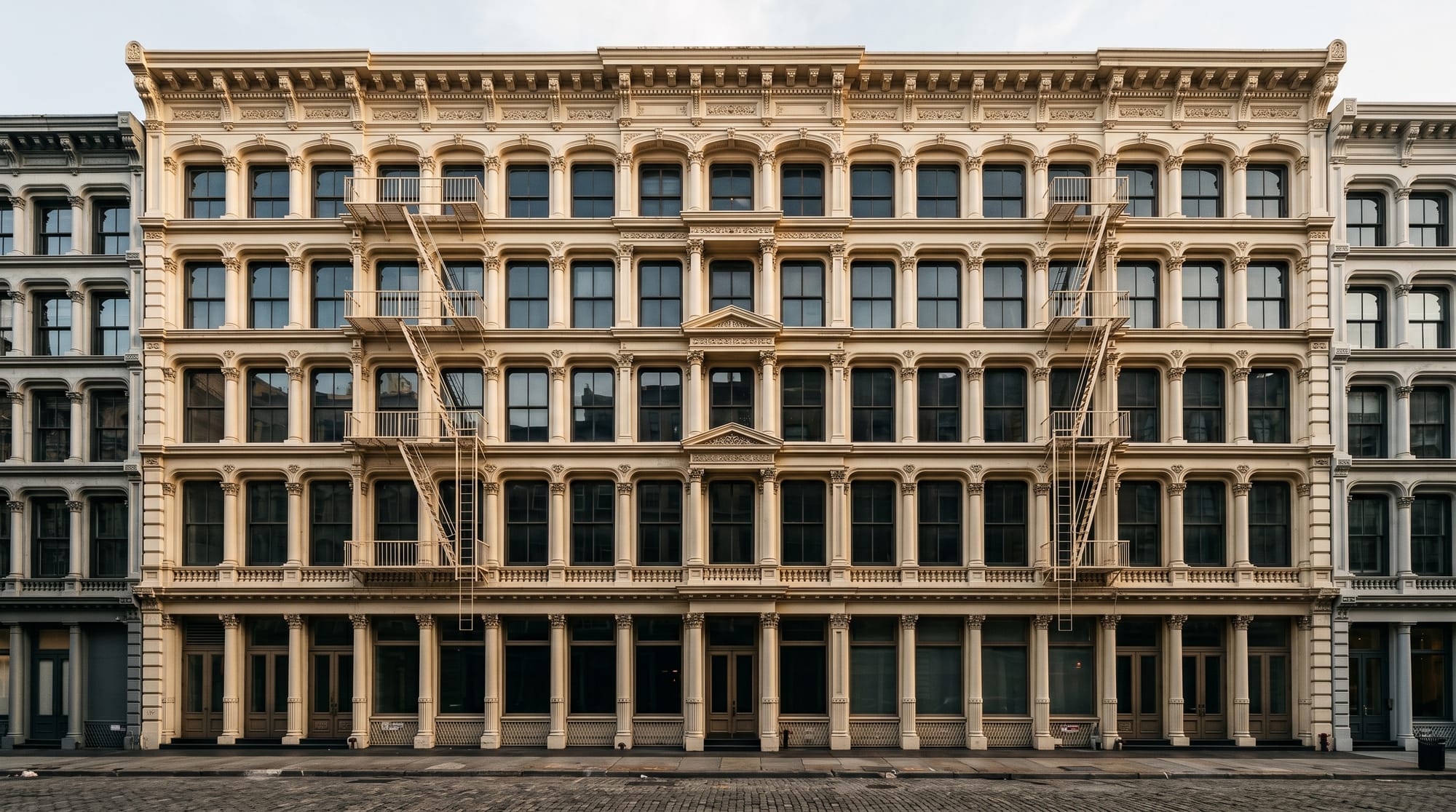
Plate I · Exterior · Cast-iron facade from Greenwich Street
AVH · IMG · 024
Tribeca, Manhattan, NY 10013.
A full-floor loft of 6,200 square feet in an 1882 Stephen Decatur Hatch cast-iron building on Greenwich Street, Tribeca. Triple-mint condition; the present owners are the building's principal shareholder and its operator. Original cast-iron columns intact; principal services replaced.
Provenance
1882
The building at this address is constructed by Stephen Decatur Hatch, one of the principal architects of New York's cast-iron commercial era. The building is one of fourteen cast-iron structures Hatch designed in lower Manhattan. The original facade castings are produced at the J.B. & W.W. Cornell Iron Works in the Bronx.
The building serves as a mercantile loft — first as the warehouse and showroom of a wholesale dry goods importer, later as a textile manufacturer's workshop. The full-floor loft now under representation occupies the building's third floor.
The building changes commercial use three times across this period — printing, light manufacturing, and finally storage. By 1979 the building is largely vacant; Tribeca is at this point still a wholesale-and-warehousing district.
The Tribeca neighbourhood is rezoned by the New York City Department of City Planning to permit residential conversion of the historic loft buildings. The rezoning is the catalyst for the neighbourhood's subsequent transformation. The building is one of the early conversions, with residential certificates of occupancy issued for the upper floors in 1981.
The building is designated a New York City Individual Landmark under the Landmarks Preservation Commission, in recognition of its Hatch authorship and the integrity of its cast-iron facade. The designation protects the facade and the building's historic envelope; interior alterations remain permissible subject to standard building-code review.
The present owners acquire the third-floor loft and the controlling shareholding in the building's cooperative corporation. They commission a four-year programme of work conducted by the New York-based architecture practice of Selldorf Architects and the structural engineer Robert Silman Associates. The cast-iron columns of the loft are retained and restored; the principal mechanical services are replaced. The loft is recertified by the Landmarks Preservation Commission at the close of works.
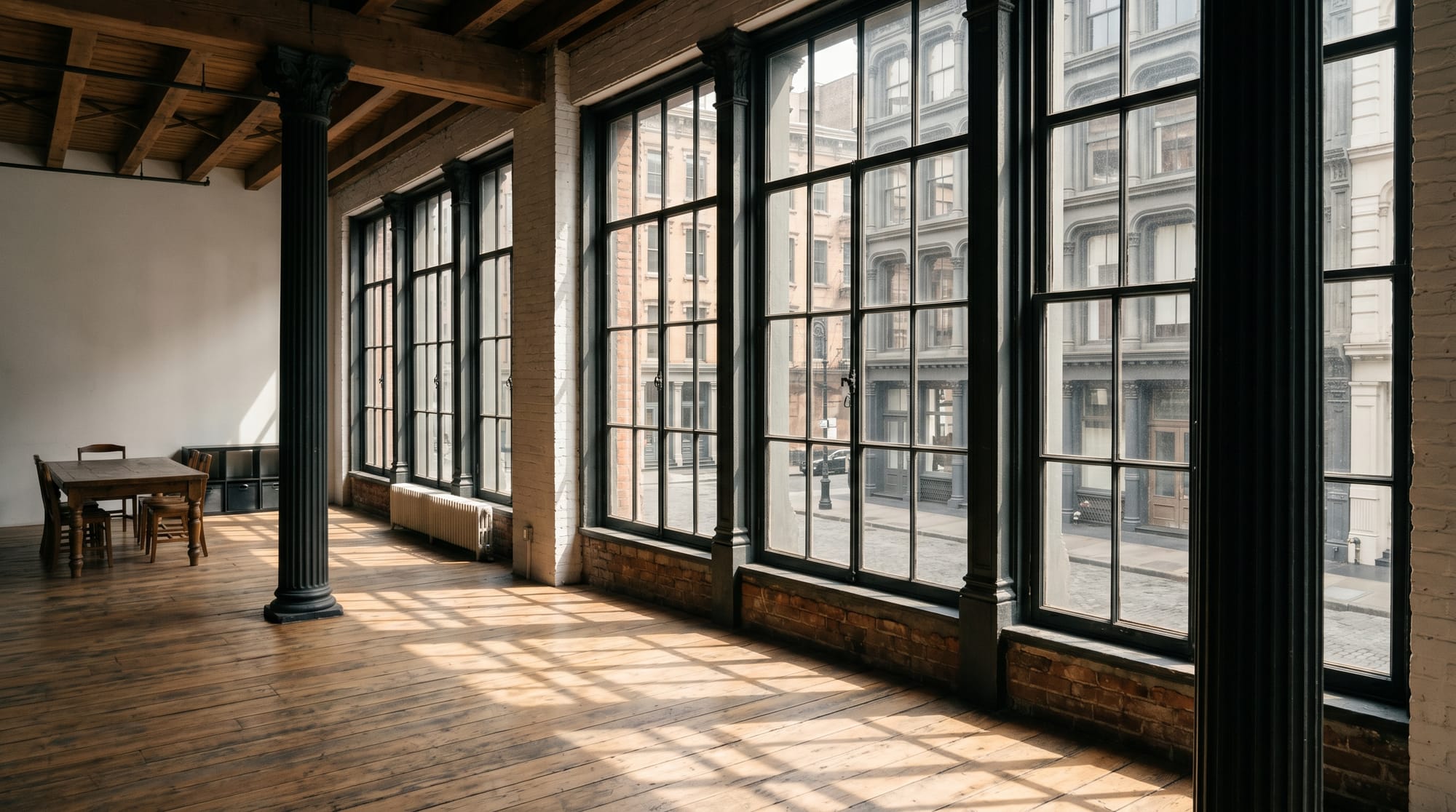
The loft occupies the entire third floor of the building. The floor is 6,200 square feet, single-volume, with twelve-foot ceilings and the building's fourteen original cast-iron columns intact across the floor plate. The columns are not architectural decoration. They are the structural system of the building — load-bearing iron columns supporting the timber-and-iron beam floor structure above, in the manner of the late-nineteenth-century cast-iron commercial typology.
The plan is organised around the columns rather than against them. The principal living area runs the full Greenwich Street frontage — five bays, fifty feet of east-facing window on the original cast-iron facade. The four bedrooms are arranged along the western boundary; the principal suite occupies the south-west corner with two exposures. The two service cores (kitchen and laundry / utilities) sit on the central spine, dividing public from private without breaking the floor's volumetric continuity.
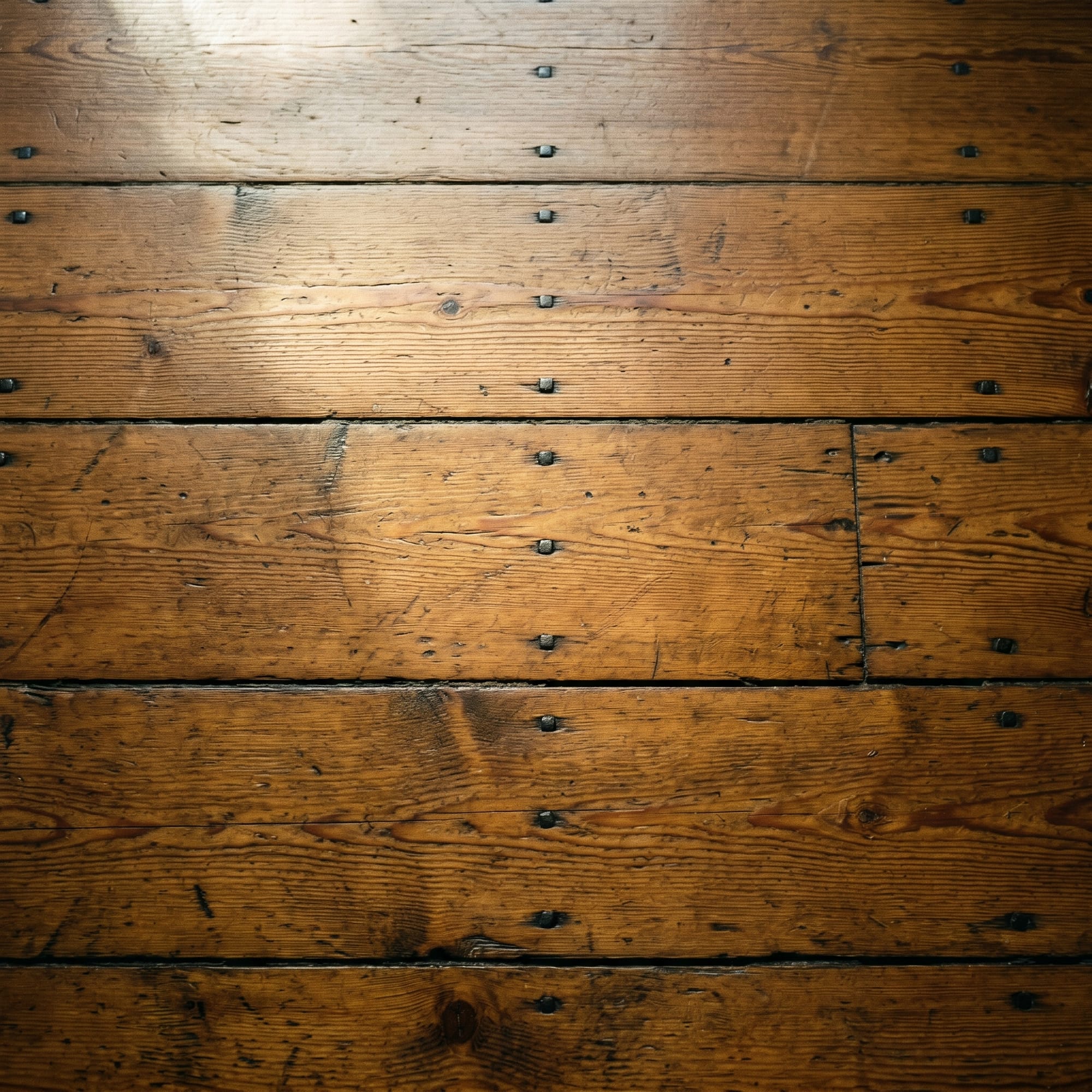
The loft has been restored in the architectural sense, not the decorative sense. The distinction is operative. The original Douglas fir floor planking, the cast-iron columns, the timber ceiling beams, and the original window joinery are all retained — repaired and refinished where required, but not substituted with reproductions. Mechanical services (HVAC, electrical, plumbing, sprinkler, security) have been wholly replaced; the loft is configured to the building-code standards required for landmark-designated structures in New York, which are more stringent than those for non-landmarked buildings of equivalent footprint.
The loft suits a buyer who understands the cast-iron typology and the obligations that come with owning a unit within a New York Individual Landmark. It is not a house that can be reconfigured extensively; the columns cannot be moved, the facade cannot be altered, and the historic envelope cannot be modified. The buyer who is right for this loft is one who arrives wanting the cast-iron architecture to remain visible.
Plates II–IV · Interior · On view by appointment
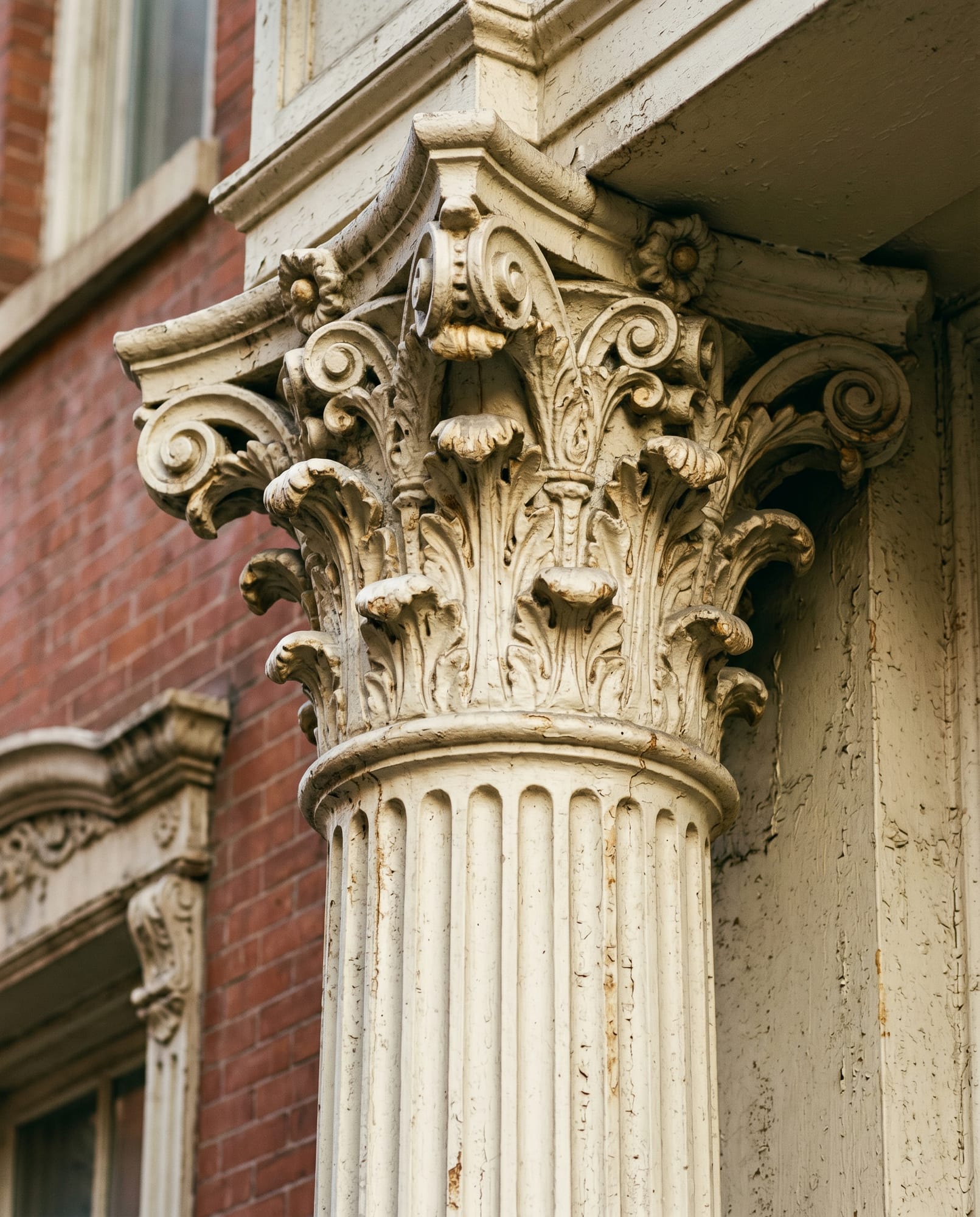
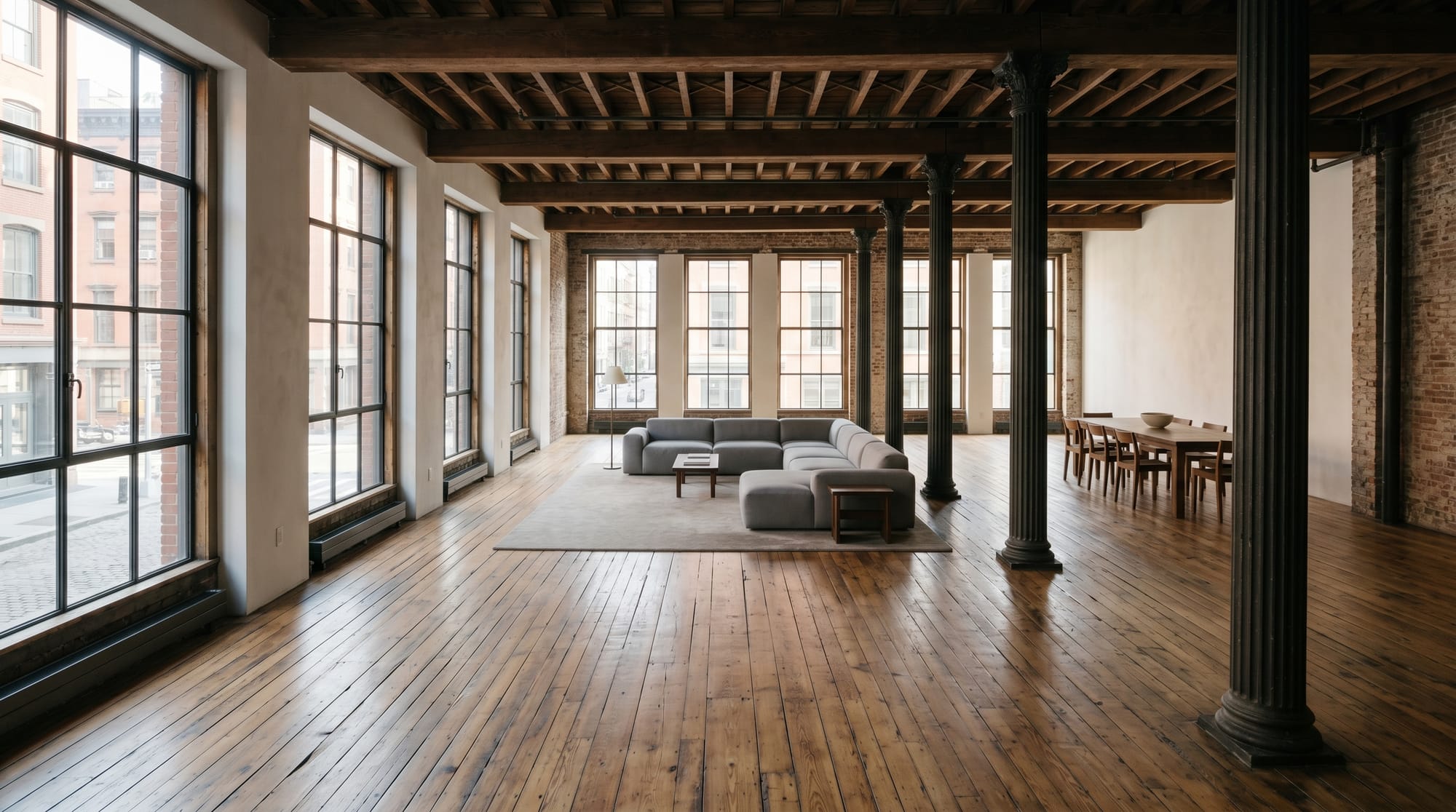
The building at this address is one of fourteen cast-iron commercial structures designed by Stephen Decatur Hatch in lower Manhattan between 1864 and 1888. Hatch was, alongside George B. Post and Daniel D. Badger, one of the architects who established the cast-iron commercial typology that defines Tribeca, SoHo, and the lower-Broadway corridor.
The cast-iron facade is the building's defining feature. The facade castings are original — produced at the J.B. & W.W. Cornell Iron Works in 1881 and installed in 1882 — and are protected by the building's Individual Landmark designation. The facade's restoration is overseen by the Landmarks Preservation Commission and undertaken by specialist contractors approved for landmark facade work in New York.
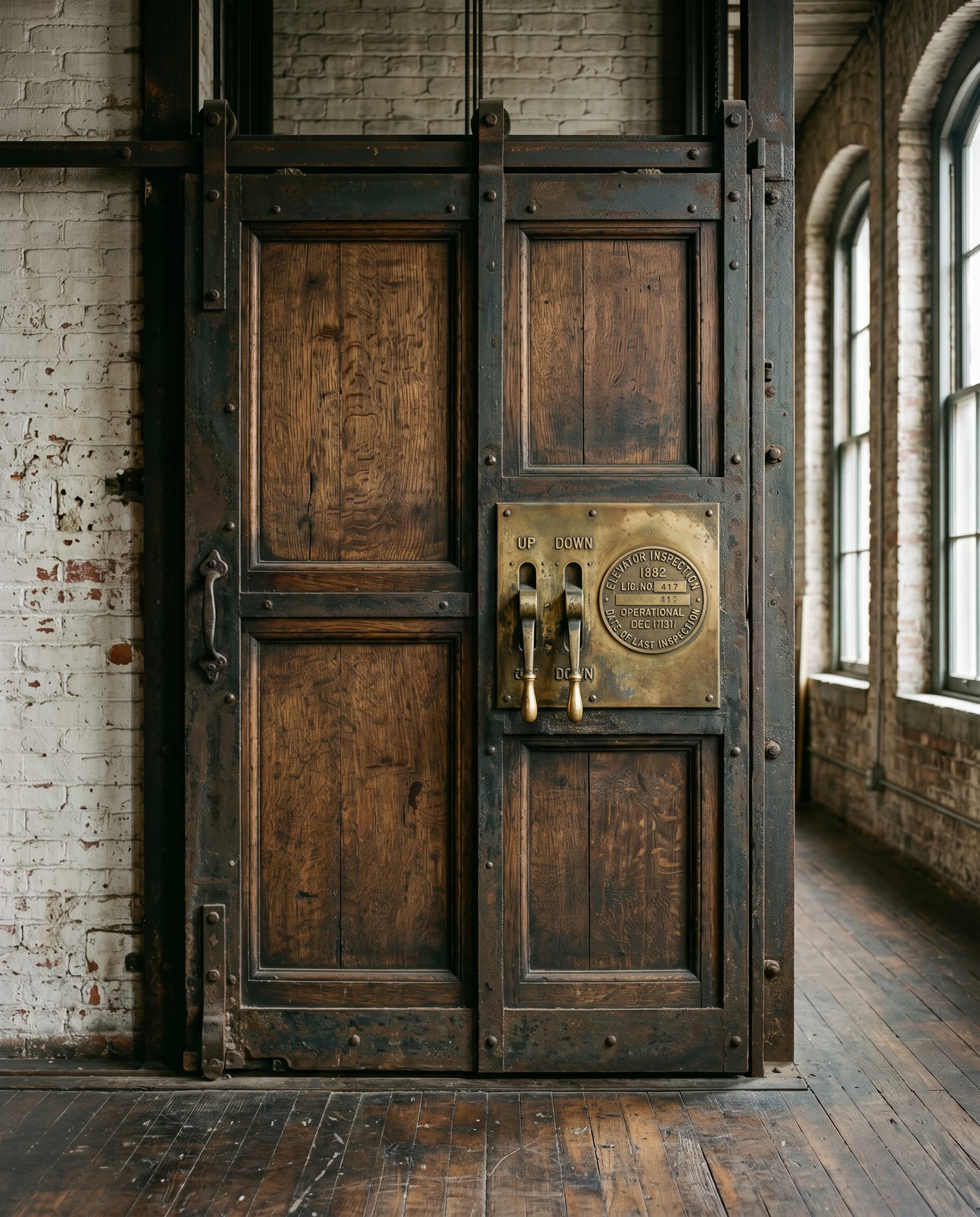
The building's six storeys above grade hold one full-floor residential unit per floor; the cellar holds shared storage, mechanicals, and a freight elevator that has been retained from the building's mercantile period. The freight elevator is operative and licensed.
The loft's distinguishing feature is its single-volume floor plate. Most luxury Manhattan apartments are organised in the Pre-War tradition of compartmentalised rooms with hallways connecting them; this loft is organised in the cast-iron tradition of an unbroken floor with the structural columns left visible.
The single-volume plan creates a distinct living experience. Sound, light, and movement carry across the floor. The columns establish rhythm without partition. The four bedrooms are configured against the building's western wall to provide privacy where it is needed; the eastern frontage along Greenwich Street is single-volume for the full depth of the principal living area.
The volumetric continuity is the loft's argument. It is also the constraint that determines who the loft suits. A buyer accustomed to Pre-War room-by-room compartmentalisation will not be comfortable here; a buyer drawn to architectural openness will find this floor among the most distinguished examples available in the neighbourhood.
Viewings of AVH·MAN·0289 are by appointment only. The loft is not open to general agents. Viewings are conducted by Marcus Vance or, where Marcus is unavailable, by the senior associate familiar with the property. Viewings are scheduled between Tuesday and Saturday during the present owners' business hours; we do not conduct viewings outside that window.
Inquiries are reviewed personally by Marcus. We respond in writing within five working days, with — where the inquiry is qualified — an introduction to the present owners' representatives and a proposed first-viewing date. We do not disclose the guide on the public page; the guide is given on application.
Begin a private inquiry →Viewing by appointment · Guide on application
Replies personally from Marcus Vance within five working days